
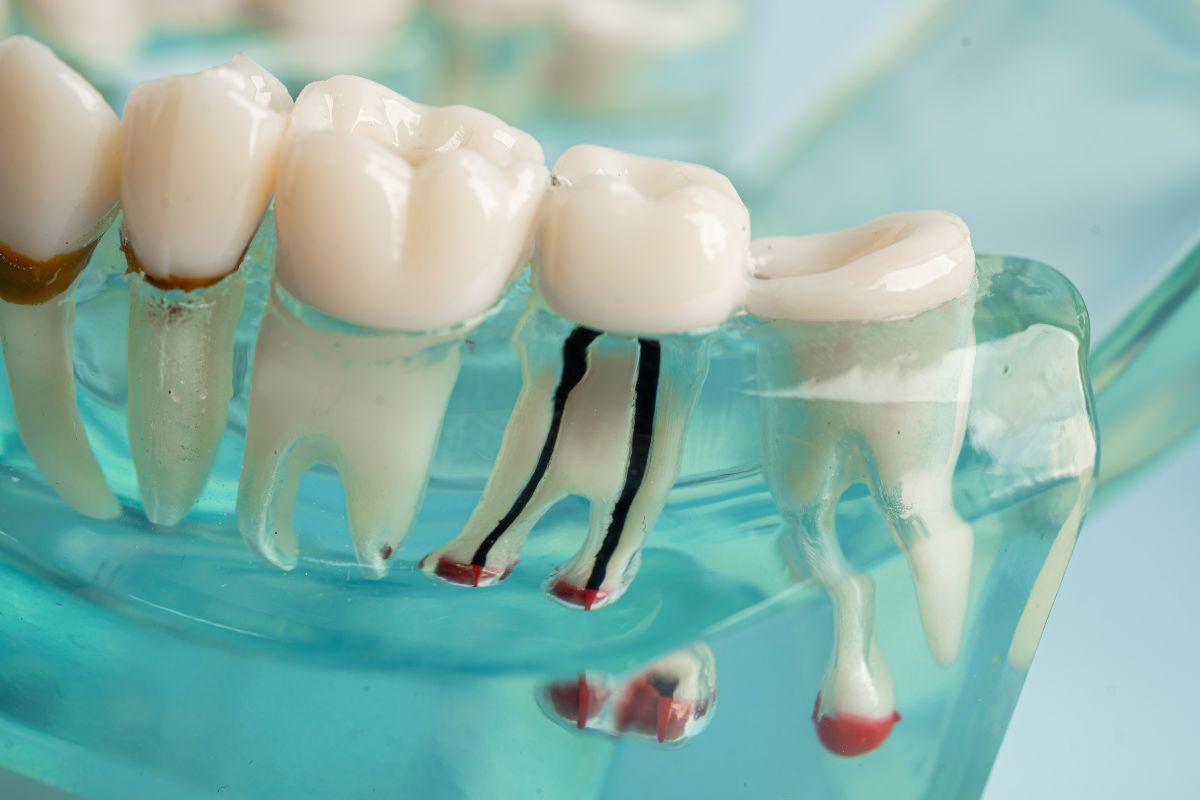
A tooth can feel completely different after a root canal. The pain may be gone, the tooth may be protected, and you may finally be able to chew comfortably again. But sometimes, there is one thing that still catches your attention when you look in the mirror: the tooth has become darker.
This color change can be frustrating, especially when the treated tooth is near the front of your mouth. The good news is that discoloration after root canal treatment does not necessarily mean something is wrong. In many cases, internal tooth bleaching can improve the appearance of a discolored tooth while preserving its natural structure.
Why Can a Tooth Darken After Root Canal Treatment?
A tooth may become darker after root canal treatment because changes can occur inside the tooth after the pulp and nerve tissue are removed. Blood products and other materials can sometimes remain within the tooth structure and contribute to gray, brown, or yellow discoloration.
This is different from typical surface staining caused by coffee, tea, tobacco, or certain foods.
Because the discoloration can originate inside the tooth, regular whitening toothpaste or an over-the-counter whitening kit may not produce the result you expect. A dental professional can first determine why the tooth changed color and whether internal bleaching is an appropriate option.
So, When Should You Bleach a Tooth?
If you’re wondering when to bleach tooth after root canal, the timing depends on the condition of the treated tooth and whether the root canal has healed properly.
In general, bleaching is considered after the root canal treatment has been completed and the tooth has been evaluated for healing, structural strength, and restoration. Your provider may want to make sure there are no signs of infection or other concerns before beginning cosmetic treatment.
The timing may also depend on whether the tooth needs a permanent filling, crown, or another restoration.
The key takeaway: Don’t rush into bleaching immediately after treatment simply because you notice a darker tooth. An evaluation should come first.
What Happens During Internal Tooth Bleaching?
Bleaching a root canal-treated tooth is different from whitening all of your teeth.
For internal bleaching, the whitening material is placed inside the tooth rather than simply applied to the outside surface. The tooth is carefully prepared, and the material is used under professional supervision.
Your provider will determine the appropriate approach based on:
- The cause and extent of discoloration
- The condition of the root canal
- The amount of remaining tooth structure
- The existing restoration
- Your overall oral health
- The shade you want to achieve
Because every discolored tooth is different, there is no universal timeline or whitening method that works for everyone.
Is Bleaching Safe After a Root Canal?
When properly planned and performed by a qualified dental professional, internal bleaching can be an option for improving the appearance of a non-vital, discolored tooth.
However, bleaching is not something you should attempt at home by placing whitening products inside the tooth. Professional evaluation is important because the tooth must be properly sealed and assessed before treatment.
If the tooth has an untreated infection, leakage, a crack, or another underlying problem, cosmetic treatment may need to wait until that concern is addressed.
What If the Tooth Still Looks Dark?
Sometimes bleaching produces a noticeable improvement, but the tooth may not reach the exact shade you had in mind. The final result depends on the cause, depth, and type of discoloration.
If internal bleaching does not provide the desired appearance, your dental provider may discuss other options, such as a tooth-colored restoration or veneer, depending on the condition of the tooth.
The goal should not simply be a whiter tooth. It should be a healthy, stable tooth with an appearance that blends naturally with the surrounding teeth.
How Long Should You Wait After Treatment?
There is no single waiting period that applies to every patient.
Your provider may recommend waiting until the treated tooth has been properly restored and there is confidence that the root canal treatment is successful. If the tooth requires additional restorative work, that can also affect the timing.
If you recently completed treatment and noticed discoloration, bring it up at your follow-up appointment rather than trying to correct the color on your own.
For patients considering bleaching tooth after root canal, an evaluation can help determine whether the timing is right and which approach is most appropriate.
Tips for Protecting a Treated Tooth
After root canal treatment and any cosmetic procedure, taking care of the tooth remains important.
- Brush twice daily with fluoride toothpaste.
- Clean between your teeth every day.
- Avoid using teeth to open packages or bite hard objects.
- Follow your provider’s instructions about chewing while the tooth is being restored.
- Attend recommended follow-up visits.
- Contact your dental office if you notice pain, swelling, a loose restoration, or another unexpected change.
Remember, bleaching improves appearance, but it does not replace good oral hygiene or restorative care.
Why Localized Dental Care Can Make a Difference
For residents of Silver Spring and the surrounding Hillandale area, having access to a dental office that can evaluate both the health and appearance of a treated tooth can make the process more convenient.
Whether you’re heading to an appointment after work along Georgia Avenue, coming from the Woodmoor area, or coordinating care around your family’s schedule, choosing a nearby practice can make follow-up visits easier to manage.
Patients searching for root canal treatments Silver Spring may also benefit from asking about what happens after treatment, including restoration, follow-up care, and options for discoloration.
Frequently Asked Questions
Can every root canal-treated tooth be bleached?
No. The tooth needs to be evaluated first. Its condition, the quality of the root canal treatment, remaining tooth structure, and cause of discoloration all affect whether internal bleaching is appropriate.
Does internal bleaching work better than regular whitening for a dark root canal tooth?
Internal discoloration comes from within the tooth, so placing whitening material inside the treated tooth may be more appropriate than relying only on external whitening. Your dental provider can determine which approach fits your situation.
Can I use an at-home whitening kit after a root canal?
You should not place whitening products inside a treated tooth yourself. Talk with a dental professional before using whitening products, particularly if the tooth has recently undergone treatment.
Will bleaching damage the tooth?
Professional bleaching is planned according to the condition of the tooth. Your provider will evaluate the tooth and explain potential risks and alternatives before treatment.
What should I do if my root canal tooth is turning dark?
Schedule an evaluation rather than assuming the discoloration is only cosmetic. Your provider can check the tooth, restoration, and surrounding tissues to determine the reason for the color change and discuss appropriate options.
Give Your Treated Tooth the Right Attention
A darker tooth after a root canal can be surprising, but it does not mean you have to live with a noticeable discoloration. The best approach is to focus on the health of the tooth first, then consider cosmetic treatment when the timing and condition are right.
If you have noticed a color change following root canal treatment in Silver Spring or want to know whether internal bleaching is right for you, Smile Loft Dental at Hillandale can help you understand your options. Schedule an appointment today for a personalized evaluation and take the next step toward a healthier, more natural-looking result.