
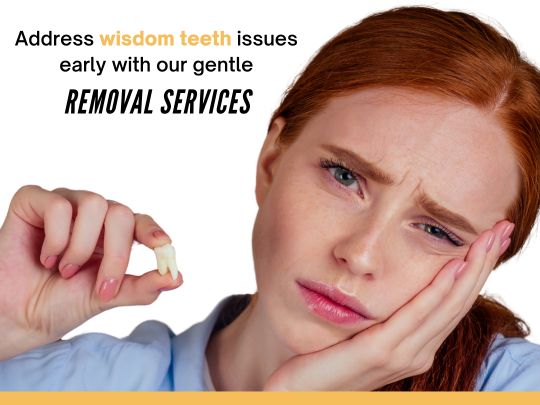
Wisdom teeth, also known as third molars, typically emerge between the ages of 17 and 25. For some people, wisdom teeth grow in without any issues. However, for many others, these teeth can cause significant problems that require removal. Whether due to overcrowding, impaction, or infection, wisdom teeth can lead to a variety of oral health issues if not addressed in time.
In this blog, we’ll explore the key signs that indicate it might be time to have your wisdom teeth removed and how a dentist can help you navigate this decision.
Pain in the Back of Your Mouth
One of the most common signs that your wisdom teeth need to be removed is persistent pain in the back of your mouth. As your wisdom teeth begin to push through the gums, they may not have enough room to emerge properly, causing pressure on the surrounding teeth and gums. This pressure often leads to discomfort or sharp pain, especially when eating or chewing.
If you experience ongoing pain in the back of your mouth, it’s essential to see a dentist. They can examine your teeth and determine whether the discomfort is caused by your wisdom teeth and whether removal is necessary.
Swollen or Tender Gums
Swollen or tender gums around your wisdom teeth are another clear indication that these teeth may be problematic. As wisdom teeth try to emerge, they can cause inflammation in the gums, leading to swelling, redness, or sensitivity. In some cases, this inflammation can develop into a condition called pericoronitis, which occurs when the gum tissue around a partially erupted wisdom tooth becomes infected.
If your gums feel swollen or tender, or if you notice pus or discharge from the area, it’s a good idea to consult with a dentist. Early intervention can prevent the issue from worsening and help avoid complications like infection or gum disease.
Impacted Wisdom Teeth
Impacted wisdom teeth occur when there isn’t enough space in the mouth for the teeth to fully emerge. As a result, the wisdom teeth can become trapped beneath the gums or grow at an angle, pressing against neighboring teeth. Impacted wisdom teeth can cause significant pain and discomfort, as well as damage to adjacent teeth.
Symptoms of impacted wisdom teeth include jaw pain, difficulty opening your mouth fully, and swelling around the jaw. If you suspect your wisdom teeth are impacted, schedule an appointment with a dentist to discuss removal options before the situation worsens.
Frequent Headaches or Jaw Pain
Surprisingly, wisdom teeth issues can also manifest as frequent headaches or jaw pain. As the wisdom teeth attempt to push through the gums or become impacted, they can cause tension in the jaw, leading to headaches or discomfort in the jaw joint (temporomandibular joint, or TMJ). This pain can radiate to the neck, ears, or head, making it difficult to identify the source.
If you’re experiencing unexplained headaches or jaw pain, it could be related to your wisdom teeth. A dentist can evaluate your teeth and jaw to determine if wisdom teeth removal is the solution to relieving your discomfort.
Overcrowding or Shifting Teeth
Another sign that your wisdom teeth may need to be removed is overcrowding or shifting teeth. When there isn’t enough space for wisdom teeth to emerge, they can push against other teeth, causing them to shift out of alignment. This can undo years of orthodontic work, or even cause teeth to overlap and crowd together, which can lead to bite problems and difficulty cleaning between teeth.
If you’ve noticed that your teeth are suddenly shifting or becoming crooked, your wisdom teeth could be the culprit. Consulting a dentist will allow you to assess the situation and take action before further damage is done.
Recurring Infections or Cysts
In some cases, wisdom teeth can cause recurring infections, cysts, or abscesses. These infections are often the result of impacted or partially erupted wisdom teeth, which create pockets where bacteria can easily accumulate. These areas can be difficult to clean properly, leading to inflammation and infection over time.
If left untreated, infections around wisdom teeth can spread to other parts of the mouth or even the bloodstream, resulting in more severe health issues. If you’ve experienced multiple infections or cysts near your wisdom teeth, a dentist will likely recommend removal to prevent further complications.
Difficulty Opening Your Mouth
If you’re having difficulty opening your mouth wide or notice stiffness in your jaw, your wisdom teeth could be contributing to the issue. As wisdom teeth become impacted or overcrowded, they can press against the jaw, leading to stiffness, limited range of motion, and even lockjaw in severe cases.
Any limitation in your ability to open or close your mouth should be examined by a dentist. They can determine if your wisdom teeth are causing the problem and discuss removal options to restore comfort and full jaw function.
Sinus Issues
It might surprise you to learn that wisdom teeth can cause sinus problems, especially if they are located in the upper jaw. When wisdom teeth grow in, they can put pressure on the sinuses, leading to congestion, sinus headaches, or even sinus infections. If you’ve been experiencing unexplained sinus issues, it could be due to your wisdom teeth.
A dentist can evaluate the relationship between your wisdom teeth and sinus health and determine if removal is necessary to alleviate your symptoms.
When to See a Dentist
If you’re experiencing any of the signs mentioned above, it’s essential to consult a dentist in Silver Spring for a thorough evaluation. Wisdom teeth can cause a range of oral health issues, from mild discomfort to severe infections or dental damage. The earlier you address potential problems, the better your chances of avoiding complications down the road.
Your dentist will likely recommend an X-ray to assess the position of your wisdom teeth and determine if they pose a risk to your oral health. If necessary, they will discuss the best treatment plan, which may involve removing one or more of your wisdom teeth to preserve the health and alignment of your smile.
Conclusion
While not everyone needs their wisdom teeth removed, recognizing the signs that they are causing problems is critical to maintaining your oral health. Pain, swelling, overcrowding, and infections are all indicators that it may be time to consult a dentist about wisdom teeth removal. Early intervention can prevent future complications and keep your smile healthy and comfortable.
If you’re concerned about your wisdom teeth or experiencing any of the symptoms mentioned, don’t hesitate to reach out to Smile Loft Dental at Hillandale for expert guidance and care.