
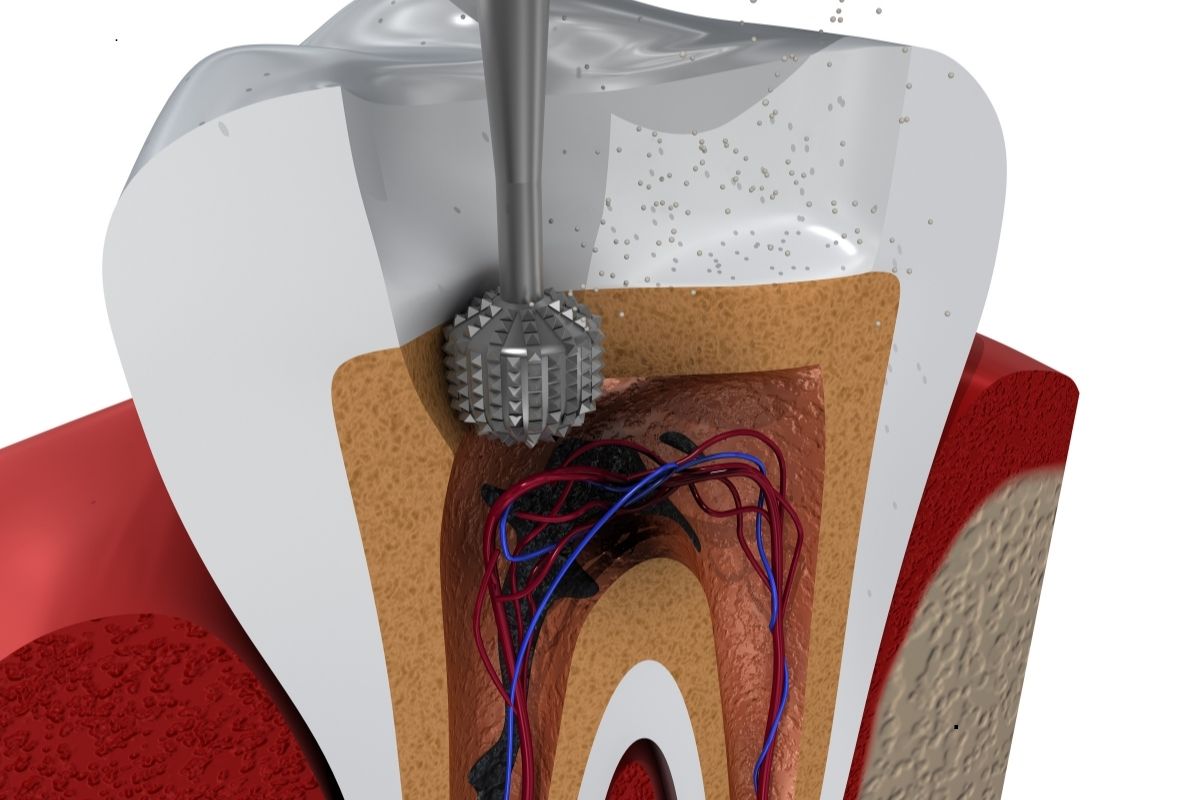
A root canal is a common dental procedure used to treat and save a tooth that is badly decayed or infected. After a root canal, the treated tooth can sometimes become discolored, leaving patients wondering if tooth whitening is an option. This blog will explore the causes of tooth discoloration post-root canal, the effectiveness of various whitening methods, and the best options for achieving a brighter smile.
Understanding Tooth Discoloration After a Root Canal
Tooth discoloration following a root canal can occur for several reasons:
- Pulp Tissue Breakdown:
- During a root canal, the infected pulp tissue inside the tooth is removed. Over time, remnants of this tissue can break down and cause discoloration.
- Medication and Materials:
- Certain medications and materials used during the root canal treatment procedure can penetrate the tooth and contribute to discoloration.
- Blood Leaks:
- Trauma to the tooth can cause blood to leak into the dentin, leading to a darkened appearance.
- Lack of Blood Supply:
- The tooth no longer receives blood supply after a root canal, which can cause it to appear darker than the surrounding teeth.
Whitening Options After a Root Canal
There are several methods to whiten a tooth after a root canal, each with varying degrees of effectiveness:
- Internal Bleaching:
- Internal bleaching, also known as non-vital bleaching, is a procedure where a whitening agent is placed inside the tooth. This method is often the most effective for teeth that have been discolored due to a root canal.
- The dentist will make a small opening in the back of the tooth, insert the bleaching agent, and seal the tooth temporarily. The process may need to be repeated several times until the desired whiteness is achieved.
- External Whitening:
- External whitening methods, such as over-the-counter whitening strips or professional whitening treatments, can be used to whiten the exterior of the tooth. However, they may not be as effective for root canal-treated teeth since the discoloration is often internal.
- Custom-fitted whitening trays provided by a dentist can offer better results compared to over-the-counter products.
- Dental Veneers:
- If bleaching is not effective, dental veneers can be a good option. Veneers are thin shells of porcelain or composite resin that are custom-made to fit over the front surface of the tooth, masking any discoloration.
- Veneers provide a long-lasting and natural-looking solution, but they involve removing a small amount of tooth enamel to fit the veneer properly.
- Dental Crowns:
- In cases of severe discoloration or structural damage, a dental crown may be recommended. A crown is a cap that covers the entire tooth, restoring its appearance and function.
- Crowns can be made from various materials, including porcelain, ceramic, and metal. Porcelain and ceramic crowns are popular for their natural appearance.
Choosing the Right Whitening Method
The best whitening method for a root canal-treated tooth depends on the severity of the discoloration and the patient’s overall dental health. Here are some factors to consider:
- Severity of Discoloration:
- Internal bleaching is typically the most effective for significant discoloration. For mild cases, external whitening methods may suffice.
- Tooth Structure:
- If the tooth is structurally compromised, a crown may be necessary to provide additional support and improve aesthetics.
- Cosmetic Goals:
- Discuss your cosmetic goals with your dentist to determine the most suitable option. Veneers or crowns may be preferred for patients seeking a complete smile makeover.
- Cost and Longevity:
- Consider the cost and longevity of each option. While internal bleaching and external whitening are less expensive, veneers and crowns offer longer-lasting results.
Maintaining a Whiter Smile
Once you have achieved a whiter smile, it’s important to maintain it. Here are some tips to help keep your teeth bright:
- Good Oral Hygiene:
- Brush your teeth twice daily, floss daily, and use an antiseptic mouthwash to remove plaque and prevent staining.
- Avoid Staining Foods and Drinks:
- Limit your intake of foods and drinks that can cause staining, such as coffee, tea, red wine, and berries. If you do consume them, rinse your mouth with water afterward.
- Regular Dental Check-Ups:
- Visit your dentist in Silver Spring regularly for check-ups and cleanings to maintain your oral health and address any issues promptly.
- Use a Straw:
- When drinking beverages that can stain, use a straw to minimize contact with your teeth.
- Touch-Up Treatments:
- Depending on the whitening method used, you may need periodic touch-up treatments to maintain the brightness of your teeth.
Conclusion
Tooth discoloration after a root canal is common, but several effective whitening options are available. Internal bleaching, external whitening, veneers, and crowns can all help restore your smile. Consult with Smile Loft Dental at Hillandale to determine the best method for your specific needs and maintain good oral hygiene practices to keep your smile looking its best. With the right care and treatment, you can enjoy a bright, confident smile even after a root canal.